
Inbound Deliveries
Your operations start here. We assess the work involved in your goods reception process and recommend a suitable solution. This helps identify the right number of movements, optimal storage and transport solutions, an adequate level of automation, and forklift trucks suited to the task.
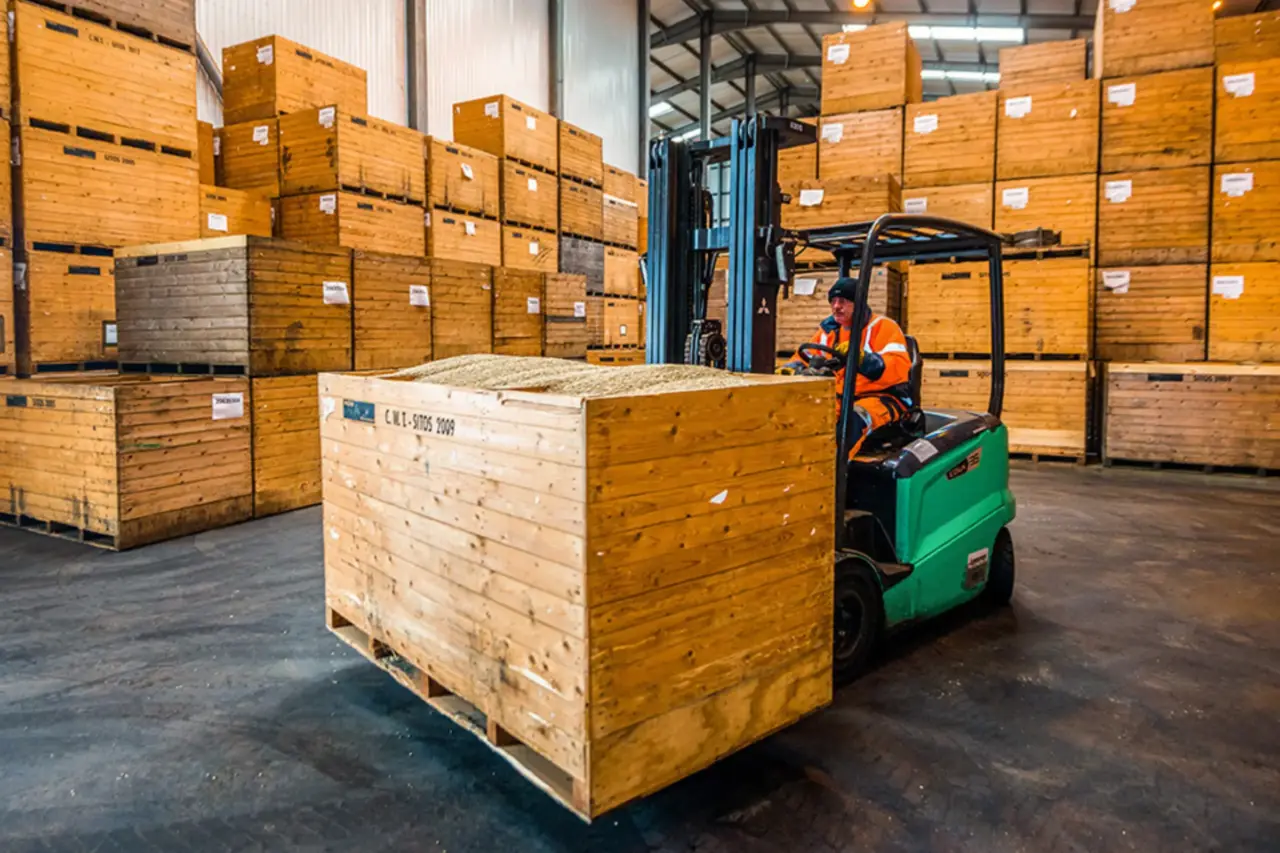
The starting point of your logistics processes
Goods arrive, are unloaded and checked, and then need to be moved to the right place as quickly as possible. If that first step doesn’t go smoothly, you’ll feel the effects for the rest of the day: queuing lorries, a crowded receiving area and equipment left waiting for each other.
At Logisnext, we help your business by improving the flow of incoming goods. From automation to forklifts and storage solutions, complemented by warehouse fittings, material handling equipment, life cycle services, hire and software solutions, we analyse your incoming goods, your space and your routes, and determine which solution will make your inbound process smoother and more manageable.
Sometimes, reorganising the reception area is more effective than bringing in extra equipment. Which is why our approach always begins with a consultation.
In some cases, a combination of manual trucks, AGVs, and intelligent fleet management can be the most effective inbound solution. Human operators provide the flexibility and problem-solving skills needed for fast unloading, while FleetController balances workflow and automatically assigns tasks to AGVs. This mixed fleet approach optimises efficiency, scalability, and responsiveness, allowing operations to adapt seamlessly to changing workloads and peak-demand periods.
Suitable vehicles for inbound operations
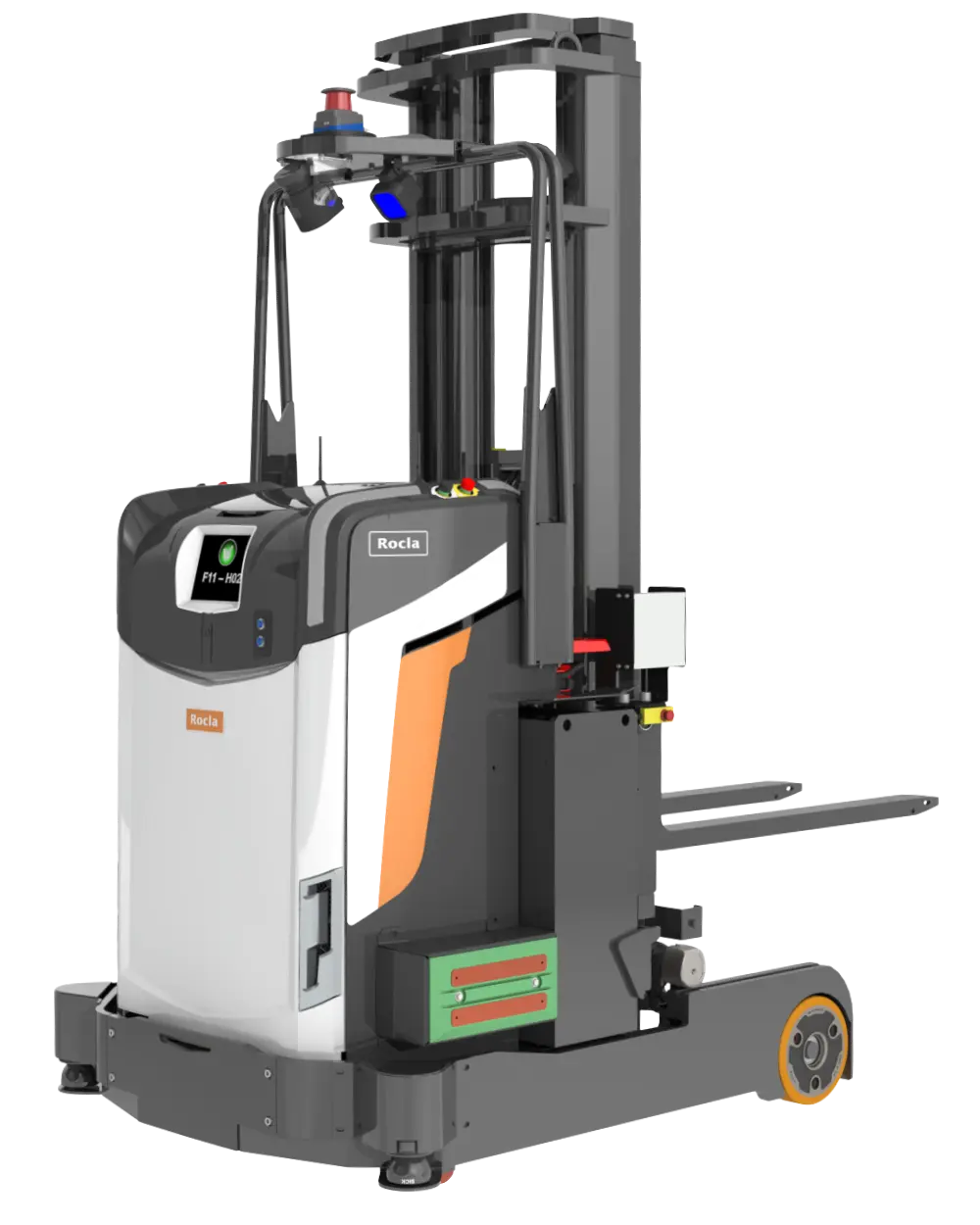
Automated Reach Truck (ART)
The Automated Reach Truck (ART) is a multipurpose solution designed to lift up to 1600 kg in aisles with free space as narrow as 2.85 m and well-suited to large warehousing operations.With several models available, we can offer solutions tailored to customer needs. New and innovative software and sensor technologies considerably increase load-handling speed, and the 10 m lifting capacity and agile turning radius aim to fulfil the requirements of the most common warehouses and make ART a great companion for other workers and vehicles in the facility.Designed to meet the ISO 3691-4 safety standard requirements and in line with the rest of our offering, ART features several safety features, including safety scanners and residual load monitoring. Safety is complemented by fluency-enhancing accessories, such as the Proximity Detection System (PDS), which improves the coexistence of AGVs, lift trucks, and people in a shared warehouse environment.The unique safety installation creates a dynamic field in the moving direction, which allows the vehicle to turn faster. The residual load monitoring constantly monitors speed, load weight, height, and reach position.During load handling, collision detection ensures the operation is performed efficiently.ART is the winner of the Red Dot Design Award 2025.
- Fast and reliable load handling
- Agile turning radius
- Safe operations with advanced safety scanner setup
- Lifting capacity: 10 m
- Can operate in 2.85 m-wide aisles
- Precise load handling
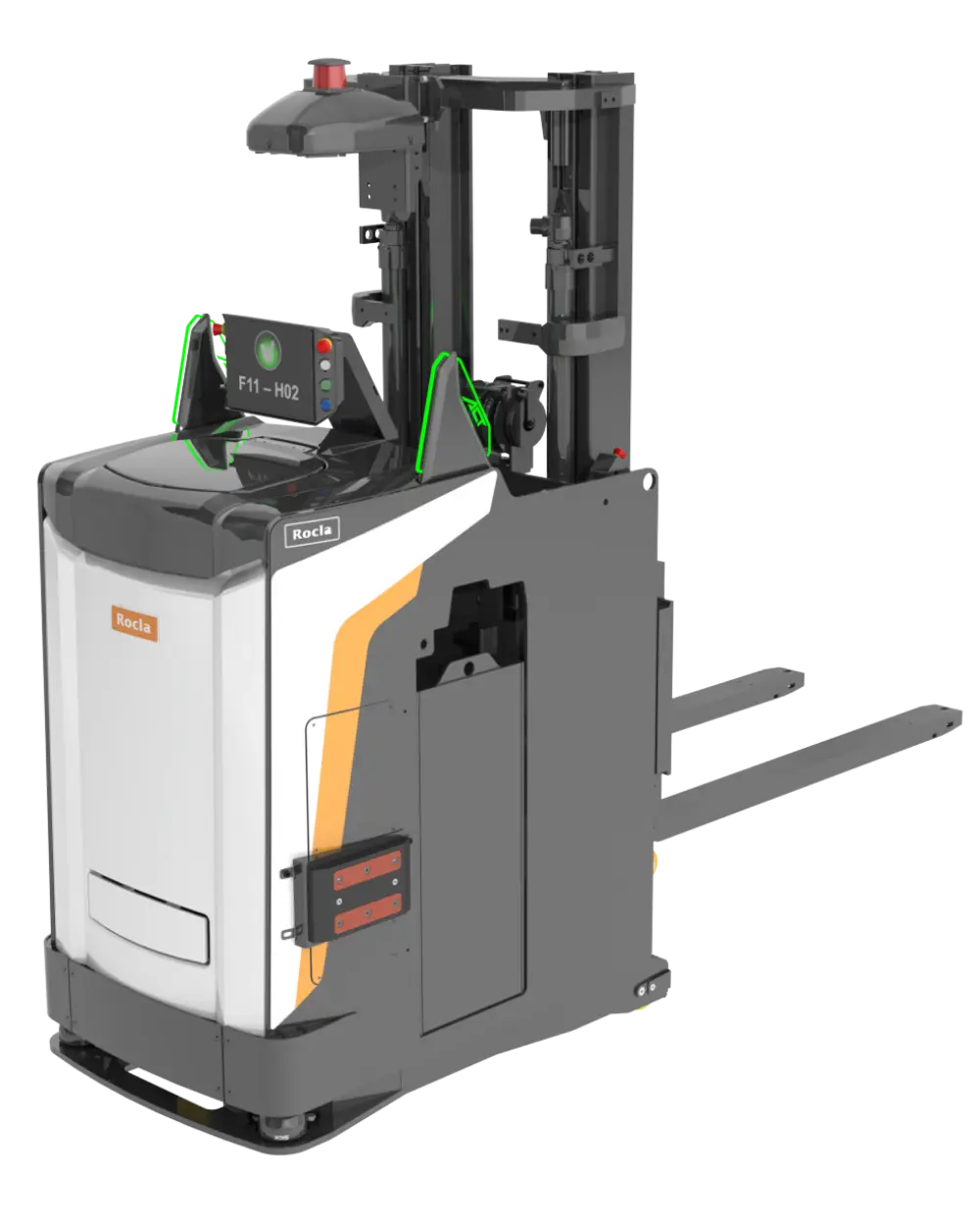
Automated Compact Truck (ACT)
The Automated Compact Truck (ACT) is ideal for heavy-duty lifting in narrow spaces. With a strong hydraulic unit, ACT can lift heavy loads up to 6 m in aisles as narrow as 2.6 m. ACT is developed with optimal automation in mind. This means harmonious interaction between AGVs and manual operations, with all systems seamlessly communicating and sharing tasks.The vehicle's touchscreen is highly responsive, with fast haptics and excellent visibility from different angles. With instructive colour-coded information, the information is conveyed quickly and clearly. LED fins on both sides of the vehicle serve as turn signals and indicate the state of ACT from a distance, improving communication with warehouse personnel.ACT meets the ISO 3691-4 safety standard requirement. It has comprehensive safety features like 360° safety fields and side clearance monitoring. By signalling its status with lights and sound, ACT makes the warehouse work safer and more efficient. Proximity detection allows AGVs, forklifts and people with tags to detect each other without a direct line of sight, slowing the vehicle down and stopping if necessary.ACT is the winner of the iF Design Award 2024, the Red Dot Design Award 2024 and the Automation Product Innovation of the Year Archie's Award 2024.
- Available as forkover and counterbalance
- Lifting up to 6 m
- Can operate in 2.6 m-wide aisles
- Fits in existing warehouse logistics
- Responsive user interface
- Designed to collaborate with manual operations
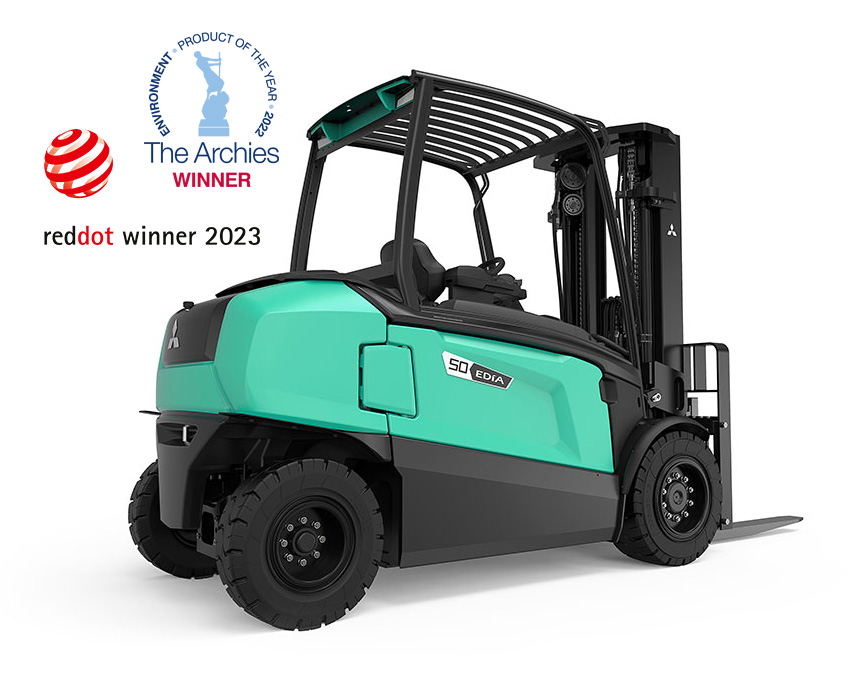

Electric Counterbalance FB40-55(C)N(H) Series
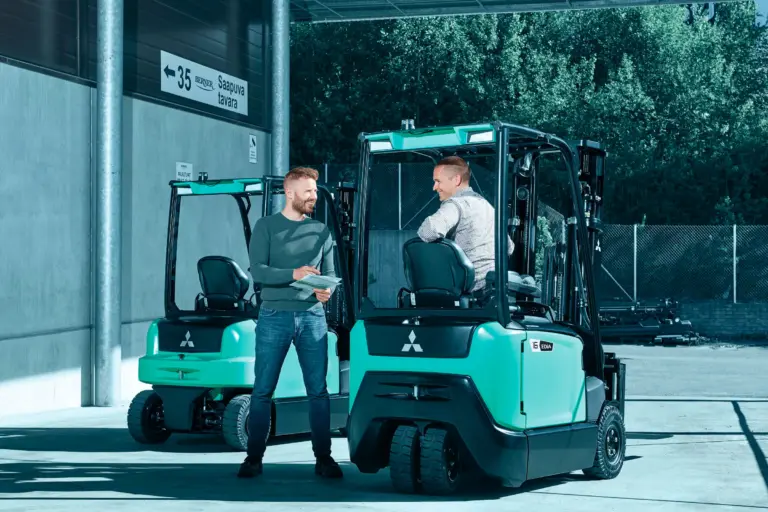
The EDiA XL benefits from revolutionary features designed to give operators greater control than ever before. Electric differential lock provides optimum traction, and Four Wheel Steering ensures better grip and precision handling. EDiA XL is also equipped with AutoBoost for extra speed and power when you need it most.It is well known that if an operator is comfortable they will be more productive. EDiA XL features a rubber-sealed cabin that minimises microvibrations, and the Low Noise Lift is the quietest on the market at only 65 dB. EDiA XL also includes AC and heater options, so temperatures can be adjusted to suit the operator. These features combine to create a stress-free environment where the operator can focus on the task at hand.For optimal handling, EDiA XL has dual joysticks that offer simultaneous lift and tilt functions, as well as Adaptive Lift Control (ALC) for added stability and little chassis movement when lowering loads.EDiA XL has the power and performance to complete any task and overcome every challenge – making it the best alternative to an IC truck. EDiA XL is even proven to have the most efficient energy consumption in its class. So you keep going for longer, with zero emissions.
- 4.0–5.5 Tonnes
- 80 Volts
- AC-power
- 4 Wheels
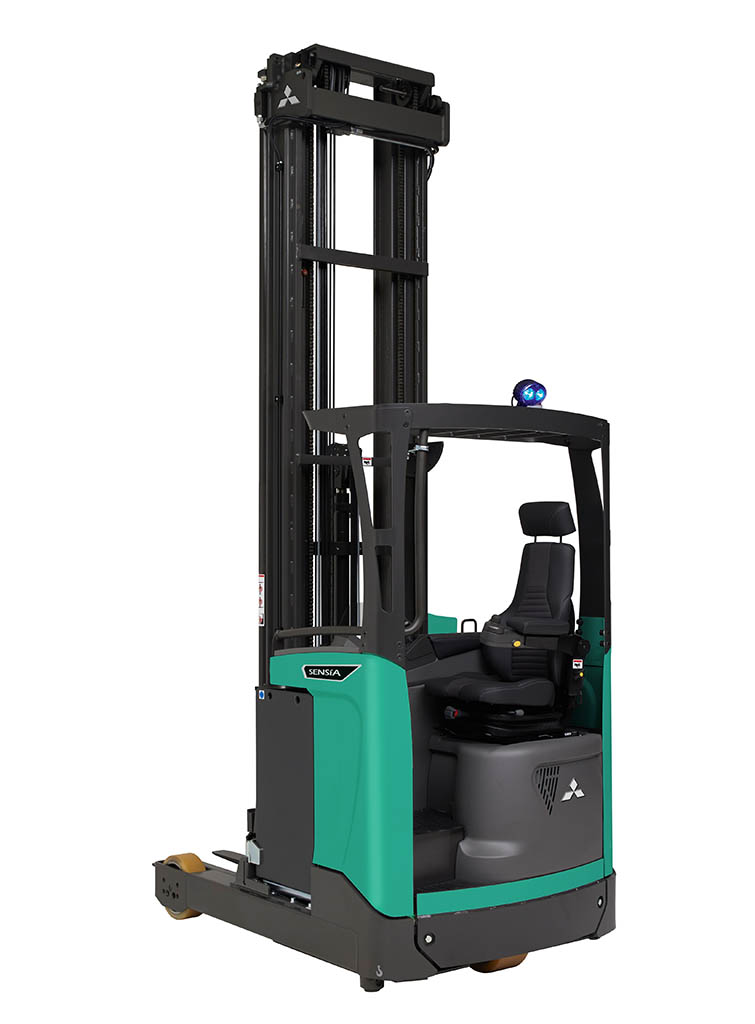

Reach Truck RB16-25N3(H)(S)(X) Series
A universal reach truck that works exactly how your operators would design a reach truck. It's a big claim. But with the control choices, the adjustability and ergonomics, the performance, the high visibility, the exceptional safety features and more as standard, plus a wide range of optional enhancements, we think you'll see it's a claim we don't make lightly.With lift heights of up to 12 metres, you'll always have a clear view on the load thanks to our MaxVision masts. It maximises visibility, while remaining exceptionally stable. This is a series that prides itself on going that extra step and always in the most efficient way possible.And while it houses a smart brain, its exterior is tough and highly robust, making it ideal for incredibly intensive operations. Combine that with legendary reliability and low total cost of operation and you'll see why we think so highly of it.
- 1.6–2.5 Tonnes
- 48 Volts
- AC-power


LPG Counterbalance FG15-35(C)P Series
Developed to help your operator achieve maximum productivity, while minimising running costs, GRENDiA ES sets the highest standards for IC engine counterbalance forklift trucks.With its exceptional fuel economy, durable components and low-maintenance design, GRENDiA makes perfect business sense. What's more, it comes with a package of advanced features, fitted as standard, that offers true value for money.Fast, stable and exceptionally powerful, GRENDiA forklift trucks offer a potent combination of high efficiency and low emissions in line with Euro Stage V regulations.To that, Mitsubishi Forklift Trucks has added a host of ergonomic features to maximise comfort, control and precision. The result is a forklift that can be relied upon to deliver top performance, whatever the application, whatever the conditions.
- 1.5–3.5 Tonnes

Diesel Counterbalance FD20-35P3 Series
Developed to help your operator achieve maximum productivity, while minimising running costs, GRENDiA ES sets the highest standards for IC engine counterbalance forklift trucks.With its exceptional fuel economy, durable components and low-maintenance design, GRENDiA makes perfect business sense. What's more, it comes with a package of advanced features, fitted as standard, that offers true value for money.Fast, stable and exceptionally powerful, GRENDiA forklift trucks offer a potent combination of high efficiency and low emissions in line with Euro Stage V regulations.To that, Mitsubishi Forklift Trucks has added a host of ergonomic features to maximise comfort, control and precision. The result is a forklift that can be relied upon to deliver top performance, whatever the application, whatever the conditions.
- 2.0–3.5 Tonnes
- 4 Wheels
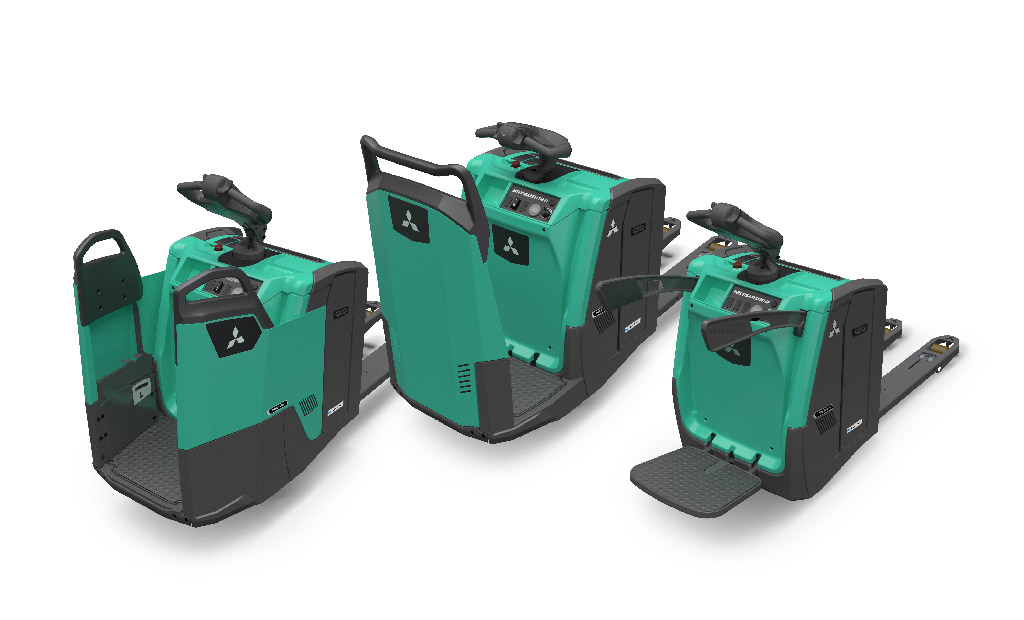

Platform Power Pallet PBV/PBF20-25N3(R)(S) Series
The PREMiA EM range is available in three variations: foldable platform, fixed platform rear entry, and fixed platform side entry. Each truck is available in either 2 tonne or 2.5 tonne capacities. All trucks feature a heavy-duty chassis in 3 sizes: mini, junior and senior to suit all battery requirements. The mini chassis is also the shortest on the market.The patented DriveSteady system ensures outstanding drive wheel pressures, excellent shock absorption and side stability when cornering – making PREMiA EM a milestone power pallet truck.The ergonomically shaped, best-in-class ErgoSteer tiller head features easily accessible controls that allow the operator to manoeuvre the truck comfortably, safely and intuitively, keeping their focus on the job at hand.Within PREMiA EM, connectors and sensors are sealed to protect from dust, water and debris, enabling long service intervals, less maintenance and maximum uptime.
- 2.0–2.5 Tonnes
- 24 Volts
- AC-power
Where your operations begin
Set the right pace
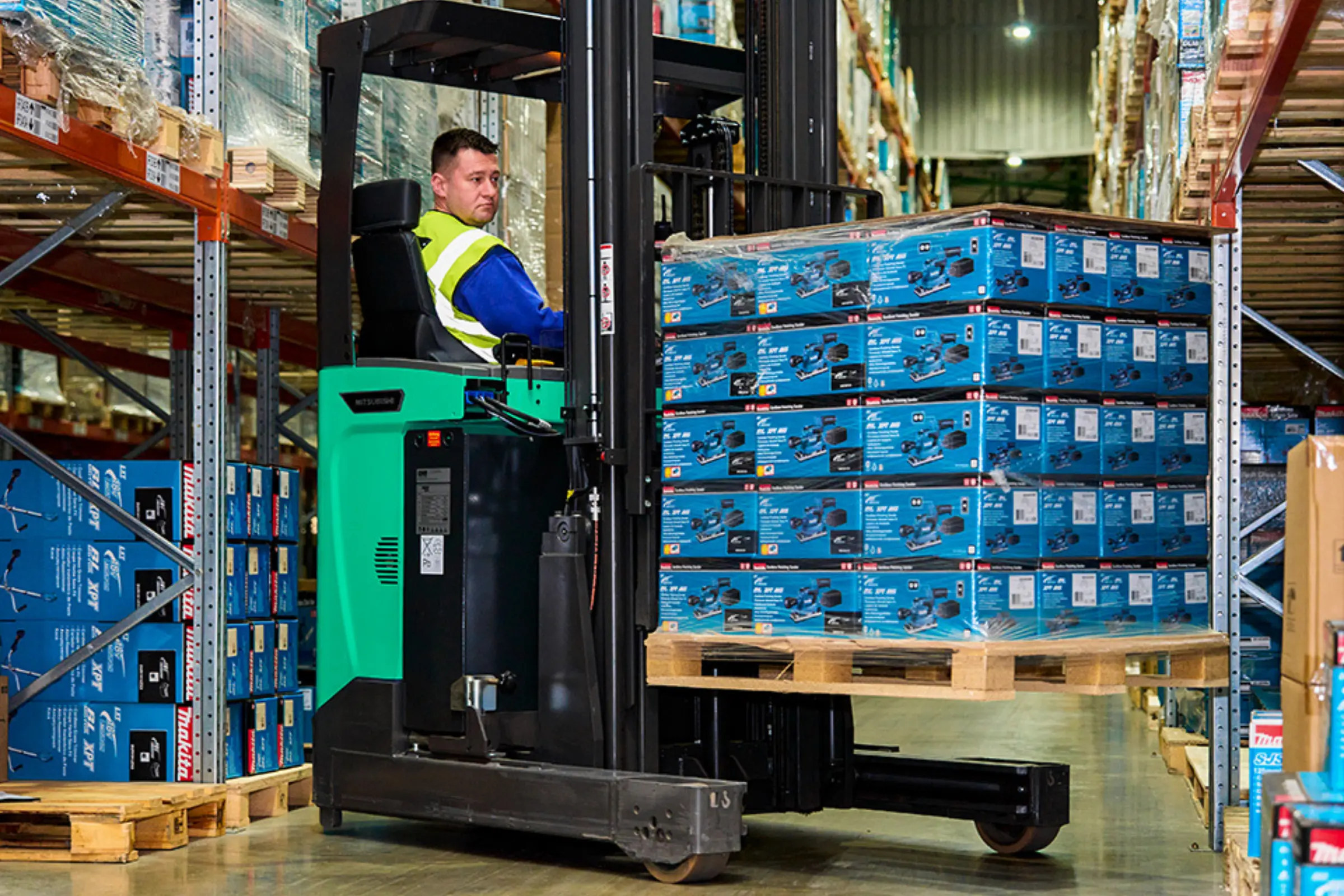
Anything left standing upon receipt will resurface later in the process. A pallet that isn’t put away straight away takes up space at the dock. A delivery that is registered too late cannot be located during order picking. And if unloading and putaway require the same equipment, a queue quickly forms.
That is why, at Logisnext, we look not just at the unloading bay, but at the entire route: from the lorry to the racking position. How many deliveries arrive each day? What type of load carriers are they? How much space is there behind the dock? And how far is it to the storage location?
Common issues
Inbound operations involve many elements coming together at once: transport, people, equipment and available space. If just one of these is out of sync, the supply chain comes to a standstill. Identifying these issues on time can help save time and costs.
- Lorries waiting for a free unloading bay
- Not enough clearance behind the dock
- Pallets left in the reception area
- Needing the same equipment for unloading and stowage
- Long distances between the dock and storage locations
- Damaged or non-standard load carriers
- Inadequate recording of incoming items
- Unplanned peaks in supply
- Damage to goods, doors or shelving
From lorry to storage facility
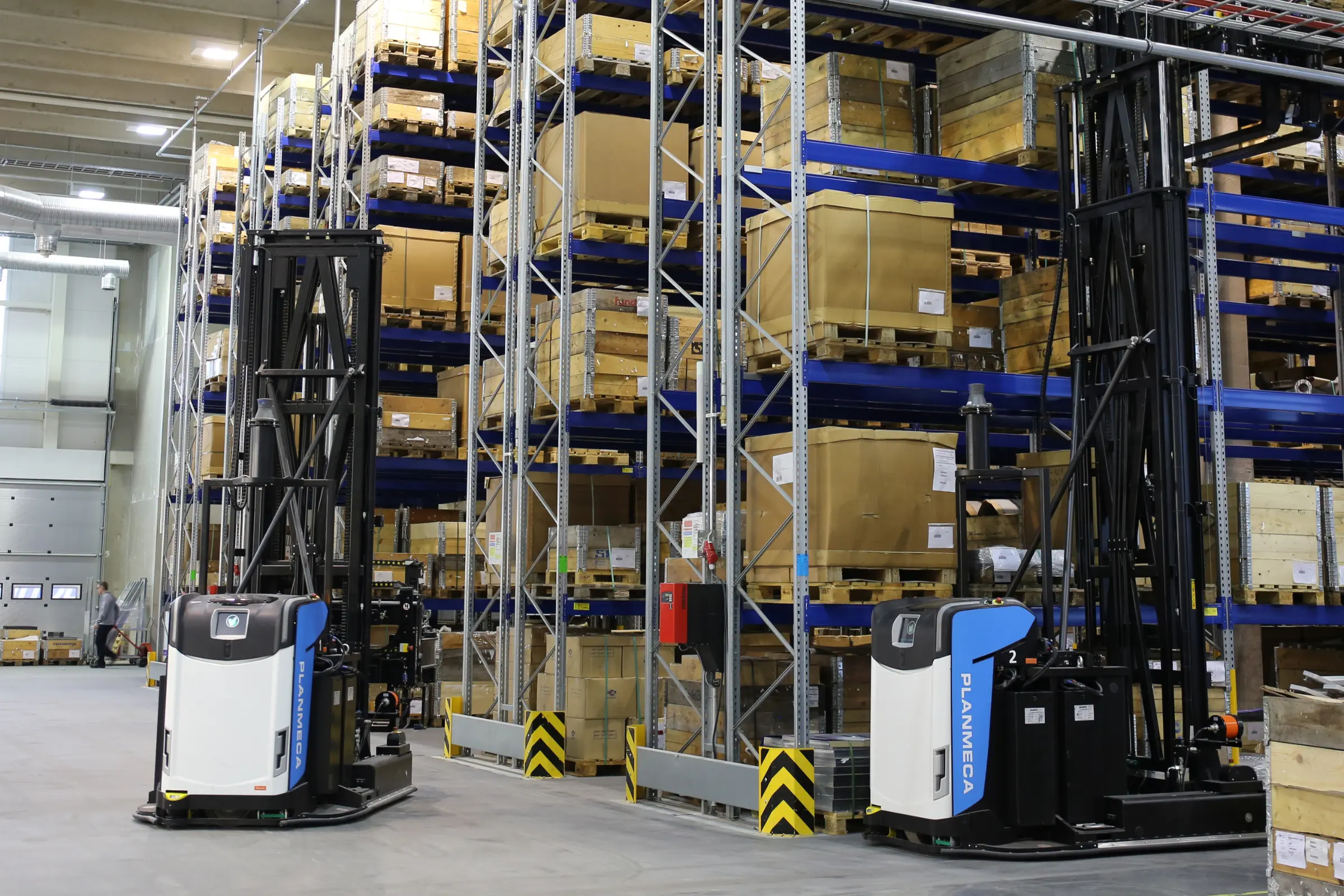
Inbound consists of a few clear steps. The better these steps flow into one another, the less time you’ll spend waiting and moving things back and forth.
Unloading
When it comes to unloading, speed and accessibility are key. Whether you’re working from a loading bay or at floor level, the equipment must be able to reach the load and move the pallet away in a single movement. For pallets inside a trailer, an electric pallet truck is often the quickest option; for heavier or irregular loads, a forklift is the logical choice.
Inspection and registration
Incoming goods must match what was ordered. A designated inspection area prevents pallets from being left lying around somewhere between the loading bay and the racking. Clearly defined zones make it easier to see what has been checked and what hasn’t.
Transport to the storage area
After inspection, goods must be taken to their destination. Here, automation might help free the human workforce to take care of tasks that require critical thinking or human skills, such as those mentioned above.
A breakthrough in the position
The final step is to position the pallet in place. If you’re working with high racking, a reach truck is the standard choice, and depending on your operations, you might benefit from automated, manual or both. For lower levels and compact storage, a stacker is often sufficient as it takes up less space in the aisle. Here, too, whether you should opt for automation will depend on your processes, needs, and facility.
Storage is key for efficient operations
It is often overlooked that having the right type of storage can help speed up the process and keep your operations running smoothly. At Logisnext, we look at your entire operation to advise you on the most efficient solution, including racking or other material handling equipment such as conveyors.
Complete your solution

Ready to make your inbound process run more smoothly?
Would you like to reduce waiting times at the dock and get goods to their destination more quickly? Our experts are happy to work with you to find a solution.
Together, we’ll look at where your receiving process could be optimised and which solution best suits your incoming goods, space and equipment.