
Automated Compact Truck (ACT)
- Available as forkover and counterbalance
- Lifting up to 6 m
- Can operate in 2.6 m-wide aisles
- Fits in existing warehouse logistics
- Responsive user interface
- Designed to collaborate with manual operations
Rocla ACT
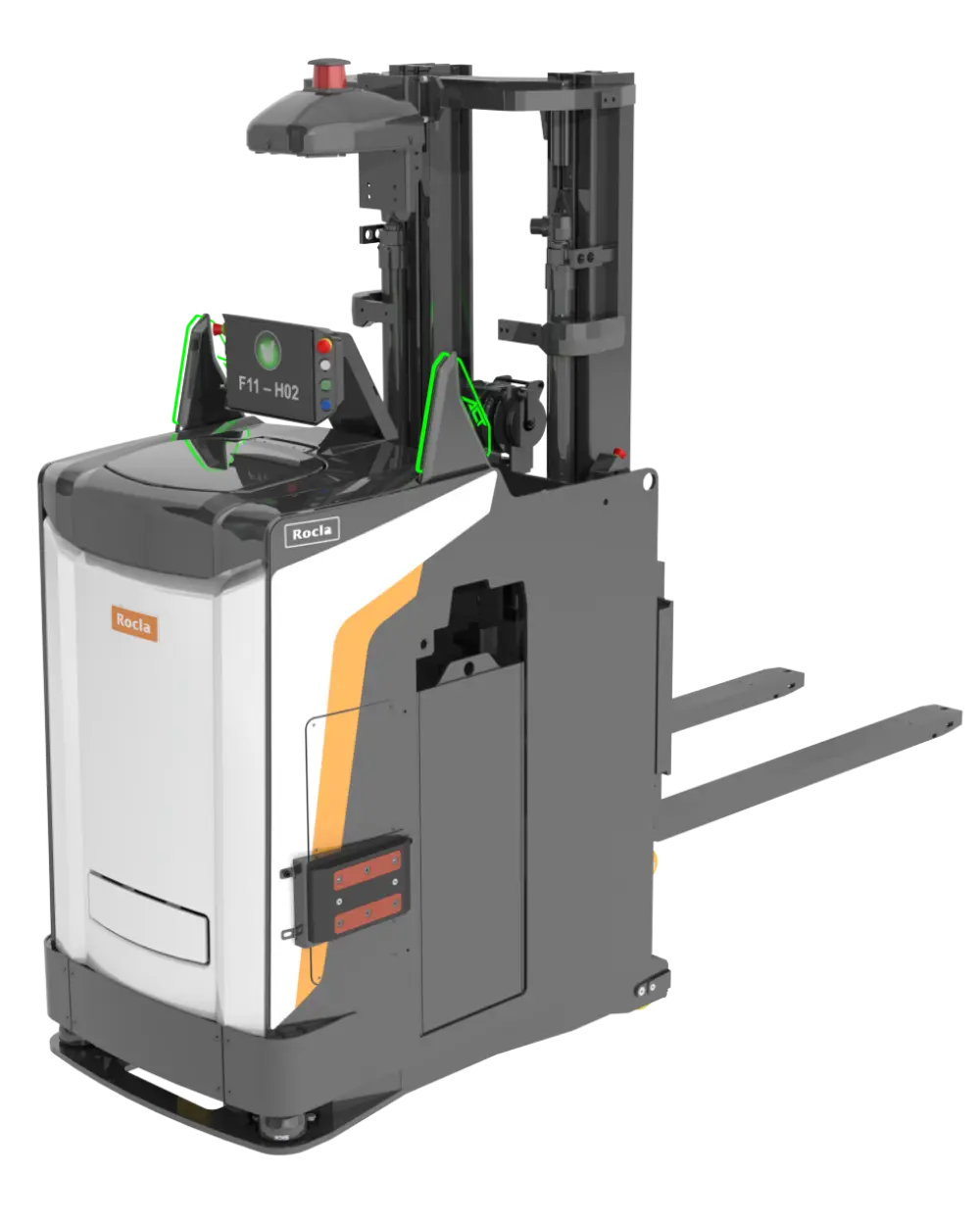
The Automated Compact Truck (ACT) is ideal for heavy-duty lifting in narrow spaces. With a strong hydraulic unit, ACT can lift heavy loads up to 6 m in aisles as narrow as 2.6 m.
ACT is developed with optimal automation in mind. This means harmonious interaction between AGVs and manual operations, with all systems seamlessly communicating and sharing tasks.
The vehicle’s touchscreen is highly responsive, with fast haptics and excellent visibility from different angles. With instructive colour-coded information, the information is conveyed quickly and clearly. LED fins on both sides of the vehicle serve as turn signals and indicate the state of ACT from a distance, improving communication with warehouse personnel.
ACT meets the ISO 3691-4 safety standard requirement. It has comprehensive safety features like 360° safety fields and side clearance monitoring. By signalling its status with lights and sound, ACT makes the warehouse work safer and more efficient. Proximity detection allows AGVs, forklifts and people with tags to detect each other without a direct line of sight, slowing the vehicle down and stopping if necessary.
ACT is the winner of the iF Design Award 2024, the Red Dot Design Award 2024 and the Automation Product Innovation of the Year Archie’s Award 2024.
Applications

Mixed fleet
A mixed fleet is an approach to intralogistics in which automated and manual material-handling solutions work together as a coordinated operation.
A mixed fleet combines AGVs, forklifts, warehouse equipment, software, automation systems, and human operators to leverage the strengths of each and create safer, more efficient, and more productive material flows.
While AGVs can perform repetitive transport operations safely, reliably, and efficiently, human operators provide the flexibility, adaptability, and problem-solving capabilities that many operations still require.
Let’s start with a consultation to explore this option for your particular operations.

Pallet racking
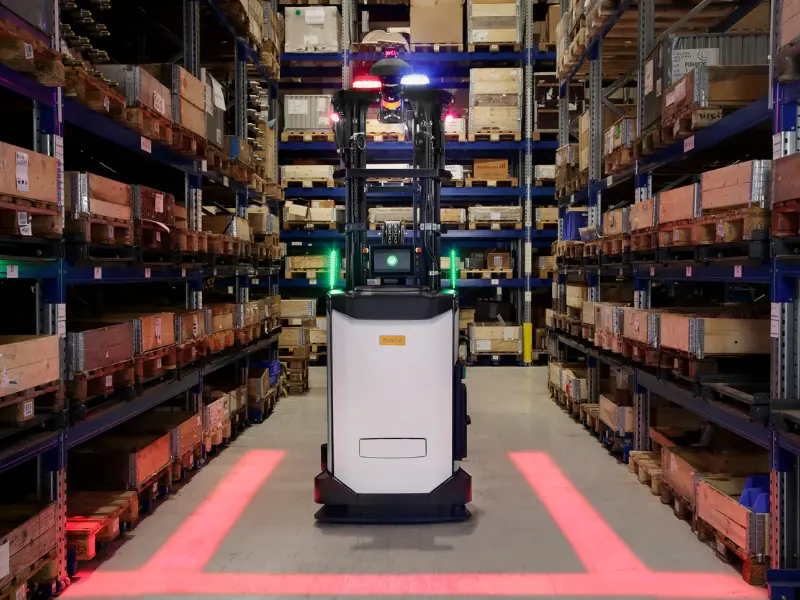
Pallet racking is the most common racking method for unit loads and makes individual pallets easily accessible. This storage method has a low capital cost and allows you to easily adjust and supplement the racks.
With automation, you can turn your shelf racking even more efficient.
Whether your rack is low or reaches a height of up to 10 m, your aisle is wide or narrow, and your traffic is one-way or two-way, we will help you find the perfect solution for your needs.
Conveyor pick-up/ drop-off
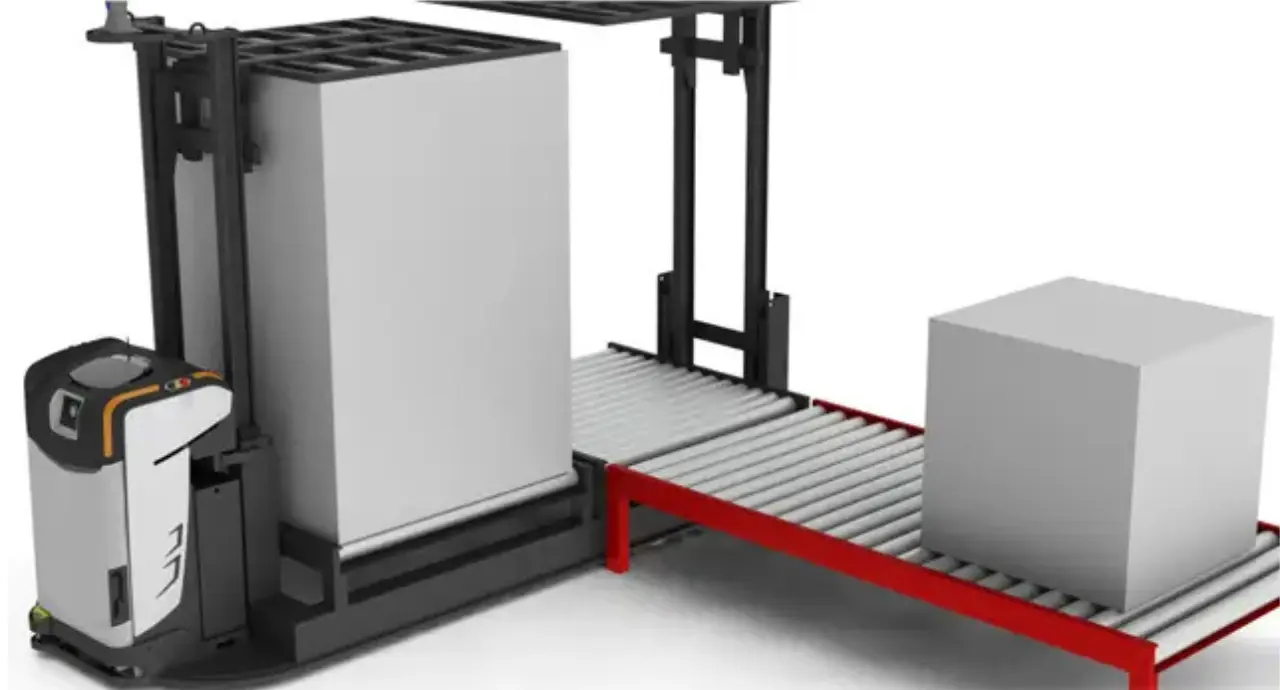
Conveyors are often used to move goods between processes and to and from warehouses. Interfacing with conveyors is common for our AGVs.
Conveyors are a convenient method of moving goods from production to the warehouse or from the warehouse to production or shipment.
AGVs operate with conveyors the same way as manual forklifts do. AGVs and conveyors interact safely by using I/O signals to negotiate when an AGV is allowed to enter a conveyor.
We can also help you find the right conveyor for your operations.

Drive-in racking
Drive-in racking maximises warehouse space by allowing forklifts or AGVs to enter the racking structure and store pallets deep within the system. Operating on a Last In/ First Out (LIFO) basis, it is ideal for storing large volumes of the same product while minimising aisle space and increasing storage capacity.
This solution brings excellent space utilisation, reduced warehouse footprint, and lower storage costs per pallet position.
Rocla ACT