
Big Plans in the Pipeline
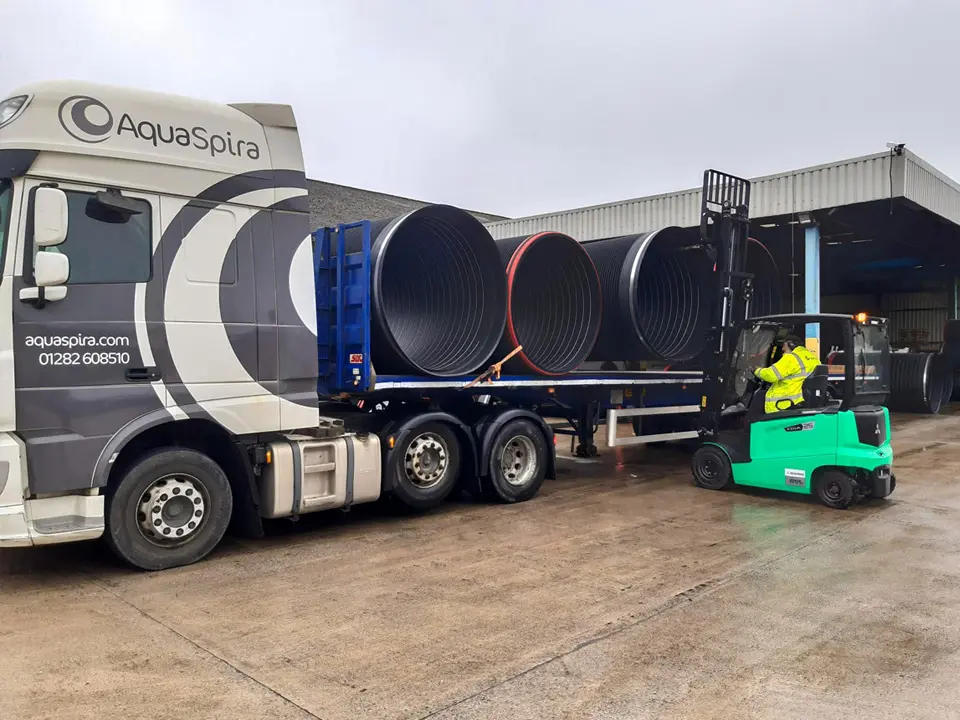
AquaSpira had ambitious plans to reduce its embodied carbon by half. This included the use of recycled materials in its manufacturing, the installation of solar panels, and reducing their road mileage. Part of the plan was looking to switch from IC engine trucks to electric forklifts. When the company’s three trucks were due for replacement, AquaSpira contacted its local Mitsubishi Forklift Trucks distributor for support.
We are investing in a series of initiatives to decarbonise our production, in line with our R&D innovations to decarbonise through pipe design and sensors. Choosing electric forklifts will help us cut not only our carbon footprint but also our running costs.
Neil Wallace, Managing Director, AquaSpira
The local distributor worked with AquaSpira to source the right trucks for its operations, recommending three models from the award-wining Mitsubishi EDiA range – renowned for its agility, strength, and state-of-the-art ergonomics.
Given the different requirements across the site AquaSpira acquired a 2-tonne EDiA EM FB20AN for use in the warehouse, a 2.5-tonne EDiA EX FB25CN for general purpose work such as unloading and loading, and a 3-tonne EDiA EX FB30CN for heavy-duty lifting of steel coils and finished pipes.
In the future, AquaSpira plans to install solar panels to generate electricity for the site, allowing the forklifts to be charged using renewable energy.
The new EDiA electric trucks are used to cover a large site over varied and sometimes uneven terrain but have proved equal to every challenge. As well as supporting leaner and cleaner operations, electric trucks have the added benefit of being future-proof, given the end to red diesel subsidies that saw the running costs of diesel trucks soar.
AquaSpira has greatly lowered the carbon impact of its fleet due to the lack of direct emissions and charging trucks via the solar panels.